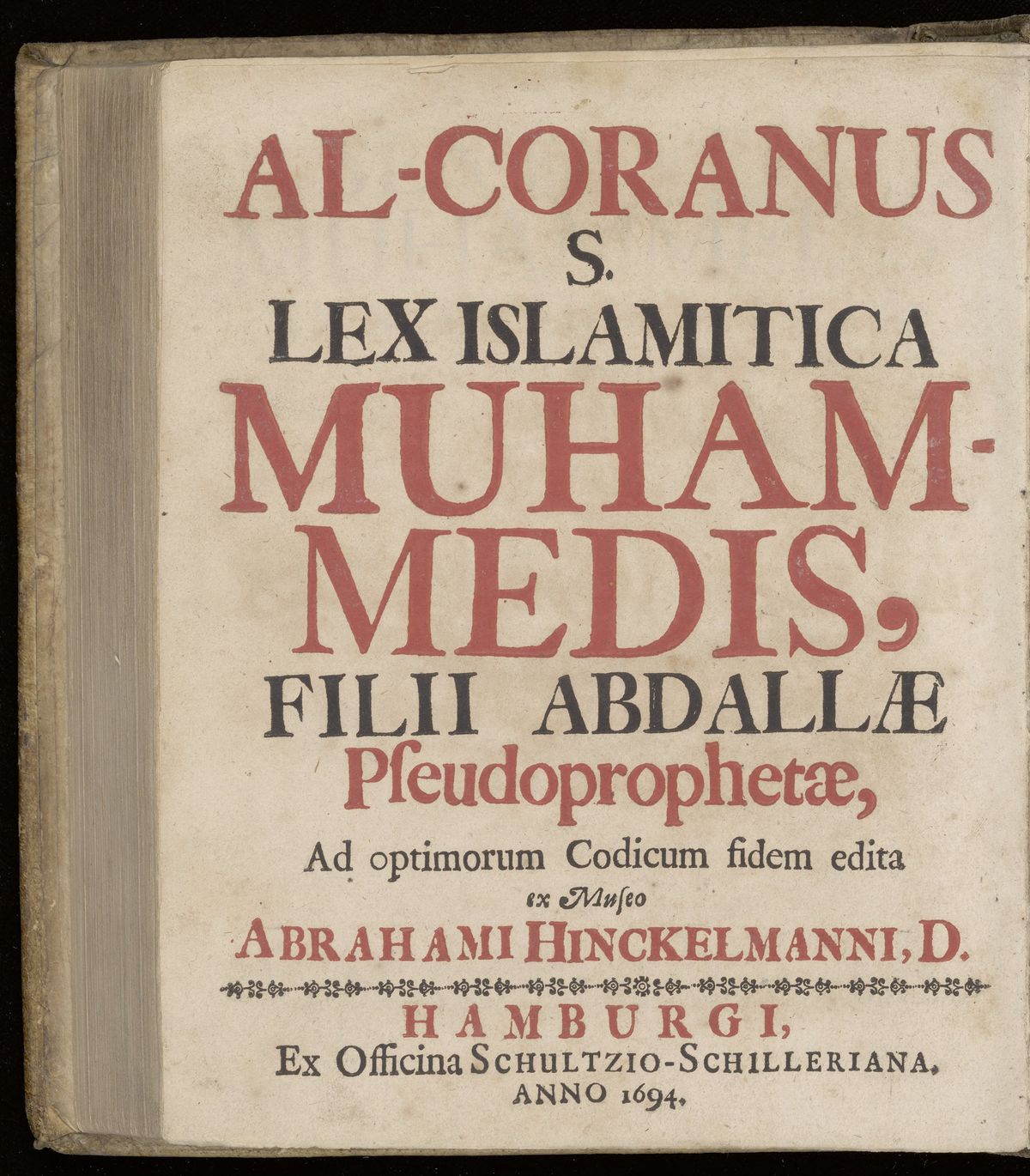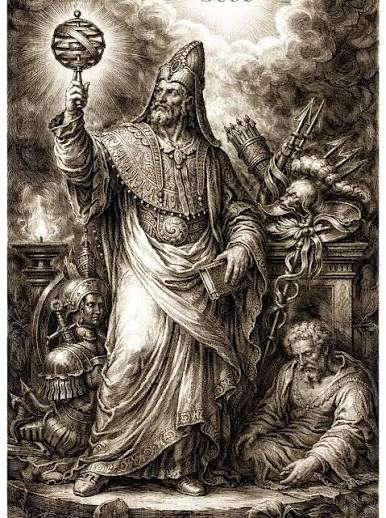

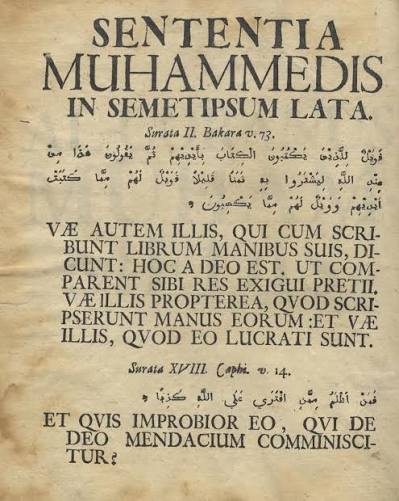
The book Alcoranus Sive Lex Islamitica Muhammedis is considered one of the earliest European works that addressed the Qur’anic text within an academic and religious framework during the early modern period. It was edited by the German orientalist Abraham Hinckelmann and published in 1694 in Hamburg. The work was written in Latin, which at the time was the primary language of scholarship and knowledge in Europe.
This book represents an early attempt to present the Qur’an to a European audience through a linguistic and cultural lens that was significantly different from its original context. The aim was not to produce a precise or neutral translation of the text, but rather to contribute to an orientalist project that sought to understand Islam from a European Christian perspective—sometimes even to critique it. This is evident in the title itself, where the Prophet Muhammad is referred to using a term with negative connotations (“Pseudo-propheta,” meaning “false prophet”), reflecting the dominant religious discourse in Europe at the time.
From a scholarly perspective, the work is important because it is among the first printed texts that allowed European researchers relatively direct access to the Qur’an, rather than relying on oral accounts or inaccurate interpretations. It helped open the door for later, more rigorous and accurate studies in the field of Orientalism, gradually contributing to a more objective understanding of Islam and its sacred texts.
However, the book cannot be read in isolation from its historical context. It emerged during a period marked by religious and political tensions between the Islamic world and Christian Europe, particularly in the aftermath of the Crusades and during Ottoman-European conflicts. As a result, much of its content reflects clear intellectual and cultural biases, requiring a critical and informed reading that distinguishes between its scholarly value and its ideological background.
In conclusion, this work is better regarded as a historical document rather than a precise reference for understanding the Qur’an. It reveals how Islamic texts were received in 17th-century Europe and highlights the evolution of Orientalist studies over time. Through it, researchers can gain insight not only into past perceptions of Islam but also into how academic methodologies have developed to become more balanced and objective in the modern era.
From a printing perspective, the book is notable as one of the earliest works to utilize modern printing techniques to publish a text related to Islam in Europe. This contributed to its wider dissemination compared to handwritten manuscripts and facilitated access for European scholars and theologians, influencing religious and intellectual debates in universities of that period.
Another significant aspect is that this work preceded the famous Latin translation of the Qur’an by Ludovico Marracci in 1698, which was later considered more accurate and methodologically sound. Therefore, Hinckelmann’s work can be seen as a transitional stage between earlier polemical translations and later efforts that attempted to approach the original text with greater scholarly rigor.
Today, the book holds substantial archival value, as it is used as a source for studying the history of European Orientalism, the development of printing, and the formation of Western perceptions of Islam. Copies are preserved in major digital libraries, allowing researchers continued access and ensuring its ongoing relevance in modern academic studies.